
From peaks to permafrost: Vegetation classification in the Rocky Mountains and along the Dalton Highway, AK
Speaker: Jozef Šibík 📅 19 February 2026 | 🎥 Recording of the seminar: link
Brief abstract: The alpine regions of the Rocky Mountains and Arctic Alaska are significantly influenced by various drivers of ecological change, including the disappearance of glaciers, alterations in nutrient cycling, and other impacts of climate change or land use. These factors contribute to profound changes in vegetation patterns, serving as critical indicators of broader landscape transformations. While changes in ecological systems affect biodiversity, we understand much less about how alterations in diversity impact ecosystem functioning.
This study focuses on the classification of both alpine and Arctic vegetation, with preliminary results highlighting key differences between these ecosystems across North America and similar ecosystems in Europe. Arctic and alpine ecosystems are ideal subjects for exploring these dynamics due to several factors: high latitudes are predicted to experience more pronounced warming; cold regions face the greatest ecological consequences of climatic changes; high altitudes may see significant plant growth stimulation from rising CO₂; Arctic ecosystems, rich in frozen carbon, could exert strong feedbacks on global climate; and their relative simplicity allows for clearer observation of species effects on ecosystem processes. Notably, adaptations in Arctic ecosystems often differ from those in alpine environments, particularly in response to the absence of distinct diurnal cycles, which influences photosynthetic activity and growth patterns.
Employing frameworks established by the Arctic Vegetation Classification (AVC) and the Arctic Vegetation Archive (AVA), we aim to classify and map both alpine and Arctic vegetation types in these regions. Our research utilizes the widely accepted Braun-Blanquet classification method, which is not yet broadly established in North America, to enhance compatibility with European classification systems and other global frameworks.
Key results indicate the need to compile and revise the syntaxa list for North America, validate incorrectly published names, and incorporate new vicariant units. Additionally, we aim to align Arctic classifications with global frameworks by identifying commonalities, developing guiding principles for compatibility, and creating crosswalks between classifications such as USNVS and the Braun-Blanquet approach. While various systems have been developed for different purposes, we recognize that a definitive crosswalk may not be feasible due to differences in scale and objectives. For example, the broad-scale USNVS classification and the Biome concept are suitable for remote sensing applications, whereas the Braun-Blanquet approach is better suited for capturing variability at finer scales and for gradients that change rapidly over short distances.
The classified data will facilitate mapping and ecological assessments, while remote sensing, machine learning, and GIS will deepen our understanding of Arctic dynamics. Additionally, we propose the establishment of a consistent ecological indicator value system, prioritizing soil moisture and temperature as key metrics for assessing ecosystem health and resilience. Our findings underscore the necessity for classifications tailored to specific research purposes.
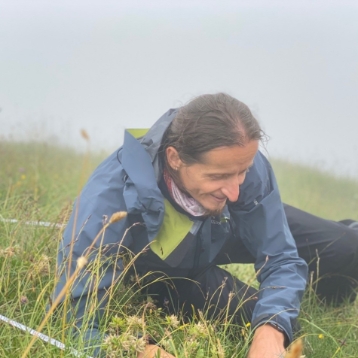
Dr. Jozef Šibík is a senior researcher at Slovak Academy of Sciences, he is a vegetation ecologist with worldwide field experiences from ecosystems of four continents (South and North America (including Alaska), Europe and Africa). His studies are of an international importance for the ecology of species and communities, syntaxonomy and vegetation dynamics; enhancing the knowledge on the transnational and multidisciplinary level. The results of his work are used in the applied branches for elaboration of management practices for various habitat types and providing expertise affecting the habitat use and restoration in changing environment. He is a certified remote pilot, recognized by Slovakia’s national aviation authority. He is authorized to operate drones (UAVs) for reconnaissance flights. He utilizes remote technologies to examine landscapes and explore automation solutions for various research questions. At the same time, he is also deeply engaged in exploring acoustic diversity as a key component of biodiversity monitoring using acoustic recorders to capture a wide range of soundscapes in various habitats. This innovative approach allows him to analyze the presence and abundance of species through their vocalizations, providing insights into community dynamics and ecosystem health. This work not only enhances our understanding of species interactions and habitat use but also facilitates early detection of ecological changes, contributing to more effective conservation strategies.